
Most AI coding tools help you write faster. Zerly is built for a different problem: understanding a codebase deeply before changing it.
Zerly is an AI-powered VS Code extension that understands your codebase through architecture maps, risk scanning, feature-flow tracing, and contextual AI chat. The core promise is simple: stop reading code line by line, start understanding systems with intent.
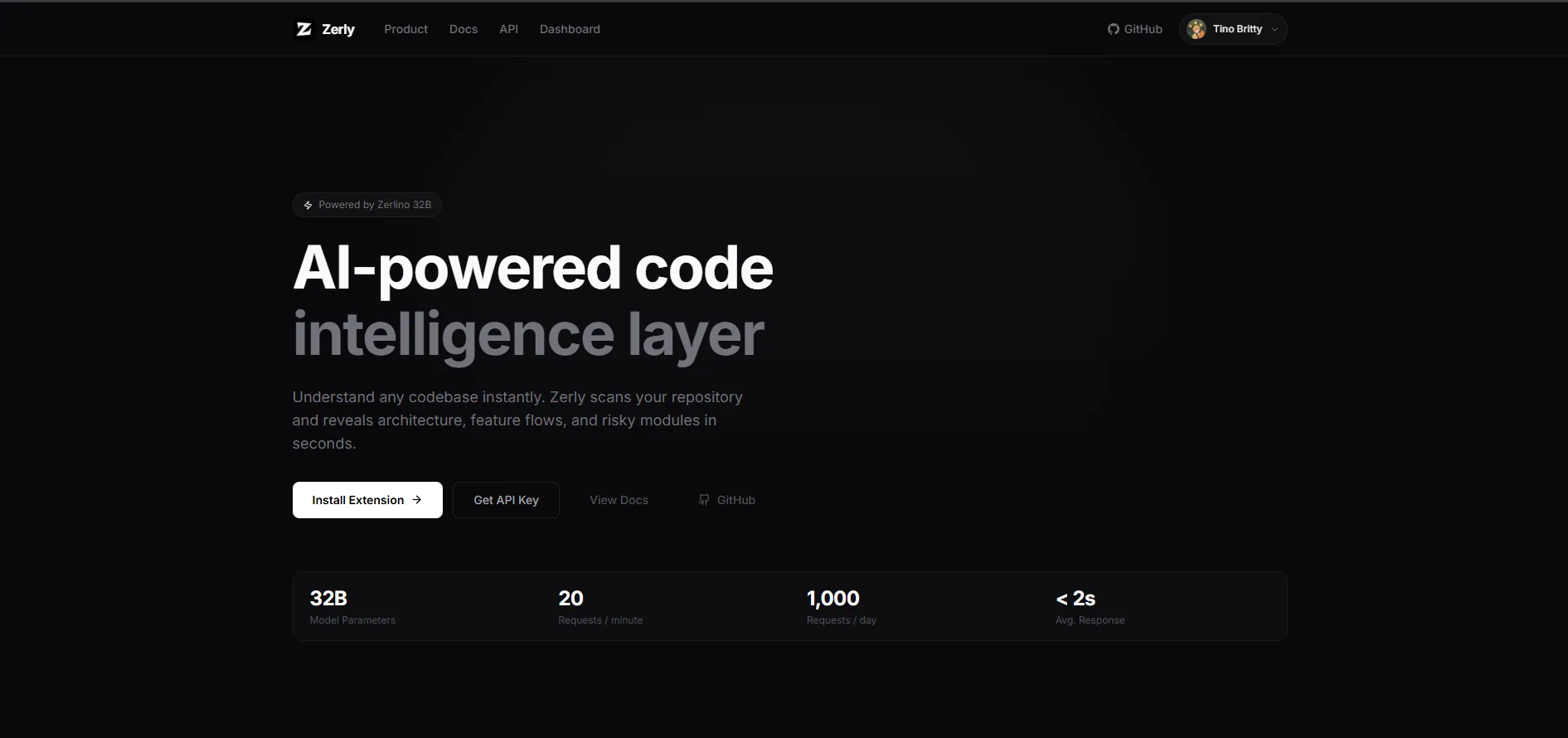
Why Zerly Feels Different
In large or legacy projects, the real cost is not typing code. The real cost is misunderstanding relationships:
- Which modules are tightly coupled
- Where a feature actually flows end-to-end
- Which files are risky to modify
- What architectural trade-offs already exist
Zerly addresses this by combining local project analysis with model-assisted reasoning. Structural work stays grounded in your workspace, while AI responses add interpretation and guidance where natural language helps.
What You Actually Get in the Extension
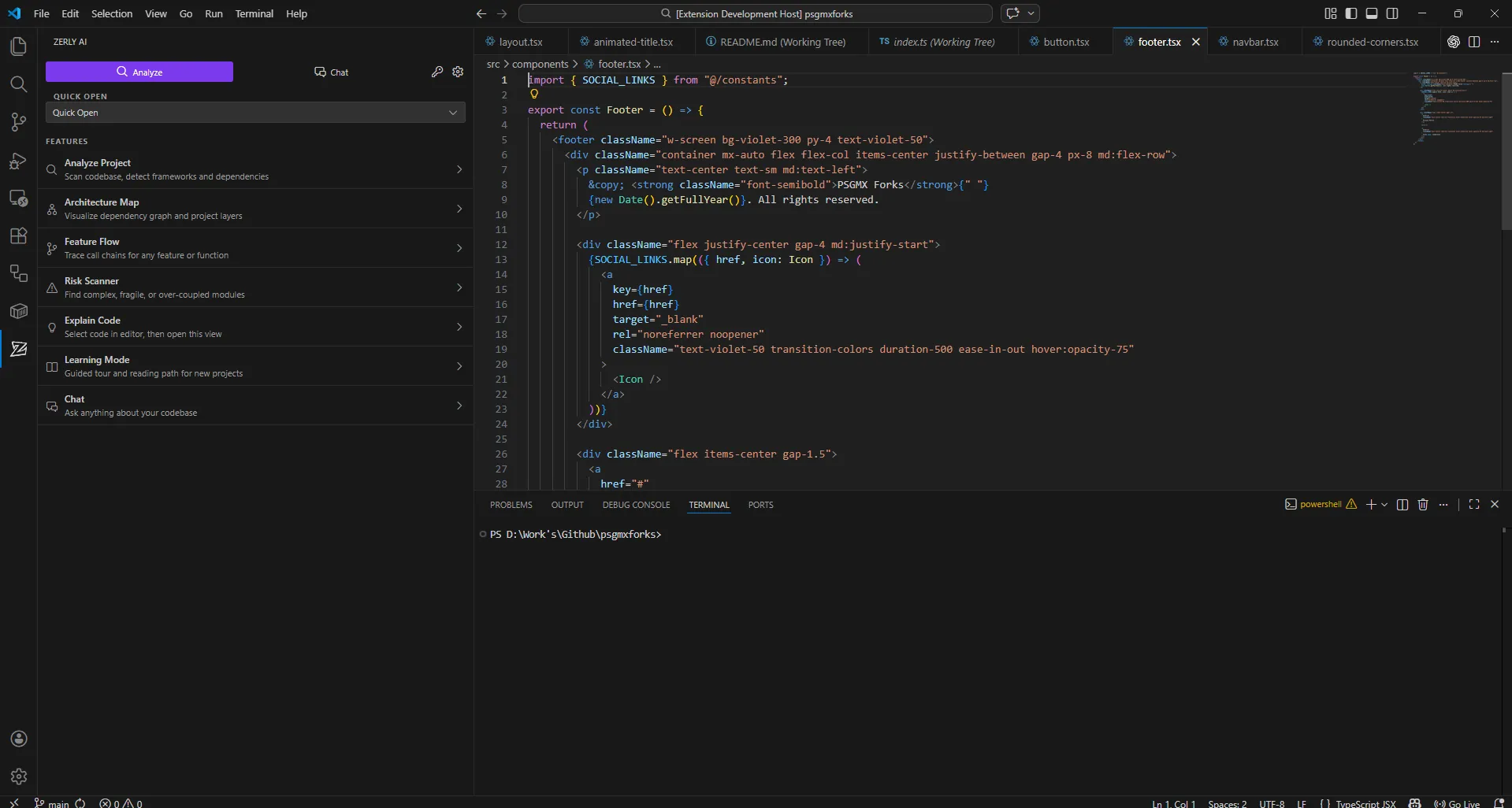
Zerly ships as a VS Code extension experience with practical workflows that developers use daily:
- Analyze Project to detect frameworks, dependencies, and language mix
- Architecture Map to visualize structure and relationships with Mermaid-style graphs
- Feature Flow Explorer to trace call chains from user-level queries
- Risk Scanner to surface fragile modules based on complexity and coupling signals
- Explain Code, Learning Mode, and Chat for context-aware AI help
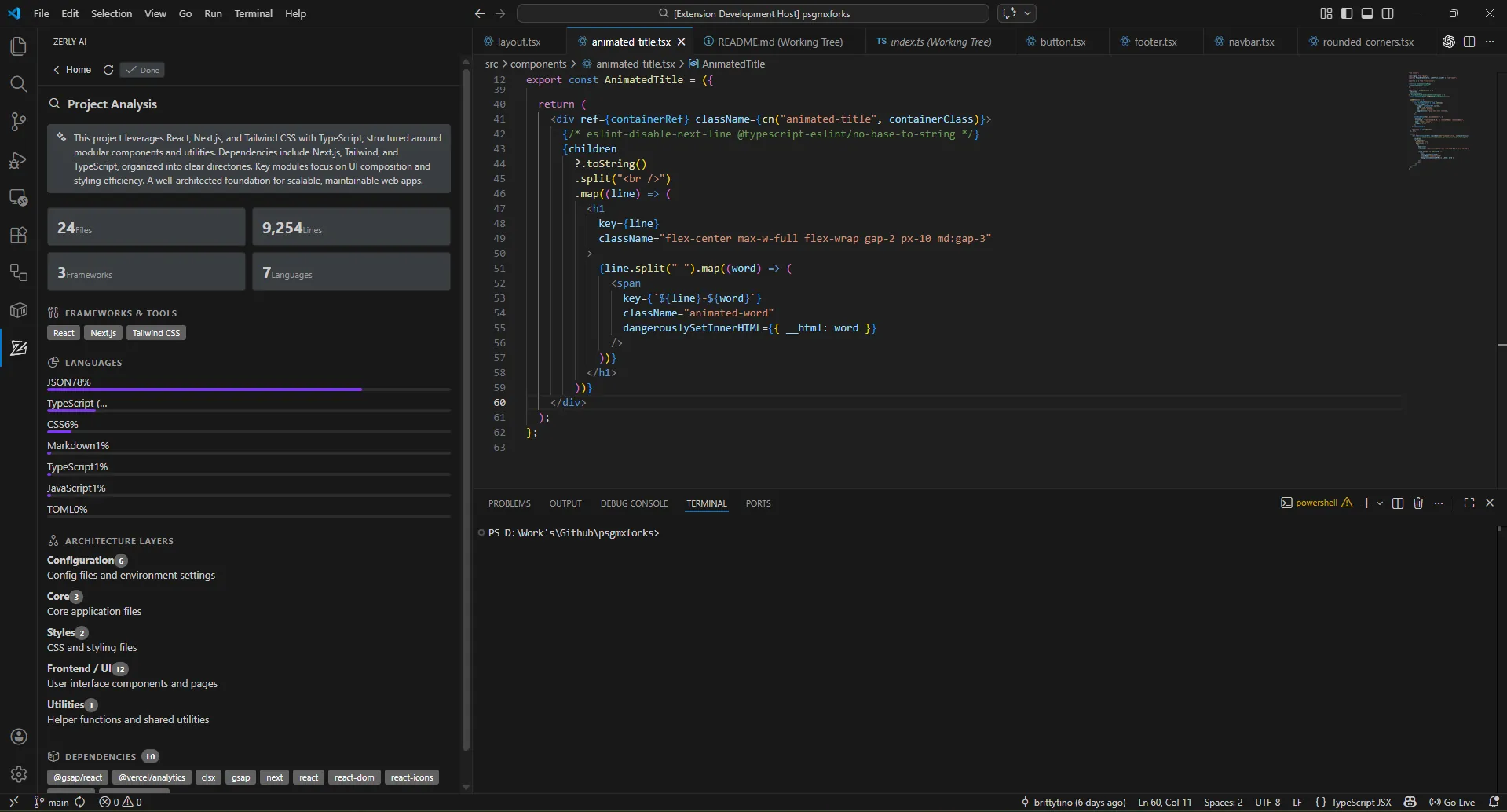
Powered by Zerlino 32B, With Routing Control
Zerly uses a hosted default model route powered by Zerlino 32B, but it does not lock teams into a single provider strategy.
You can choose three routing modes:
- Zerly default: use hosted Zerlino 32B for the full assistant experience
- Provider override (BYOK): route through your own OpenAI, Anthropic, or Gemini keys
- Auto fallback: try your selected provider first, then fail over to Zerly when auth, quota, or network failures occur
That design gives teams operational flexibility: convenience when you want speed, control when you need policy alignment, and resilience when provider requests fail.
Local-First Analysis, Cloud-Assisted Reasoning
A lot of trust in developer tooling comes from knowing what happens locally versus remotely.
Zerly keeps structural analysis tasks local, including project scans, dependency mapping, feature-flow graphing, and heuristic risk checks. AI-heavy interpretation tasks such as explanation, roadmap-style onboarding, and chat are routed through model endpoints.
This is a practical split. Deterministic structure extraction is best close to your code. Ambiguous language tasks are where models add value.
Security and Product Reliability
Zerly's security posture is designed around realistic editor usage:
- Credentials are stored through secure VS Code secret storage
- Keys are masked in diagnostics and never exposed as plaintext logs
- In-flight requests are invalidated when key state changes to prevent stale behavior
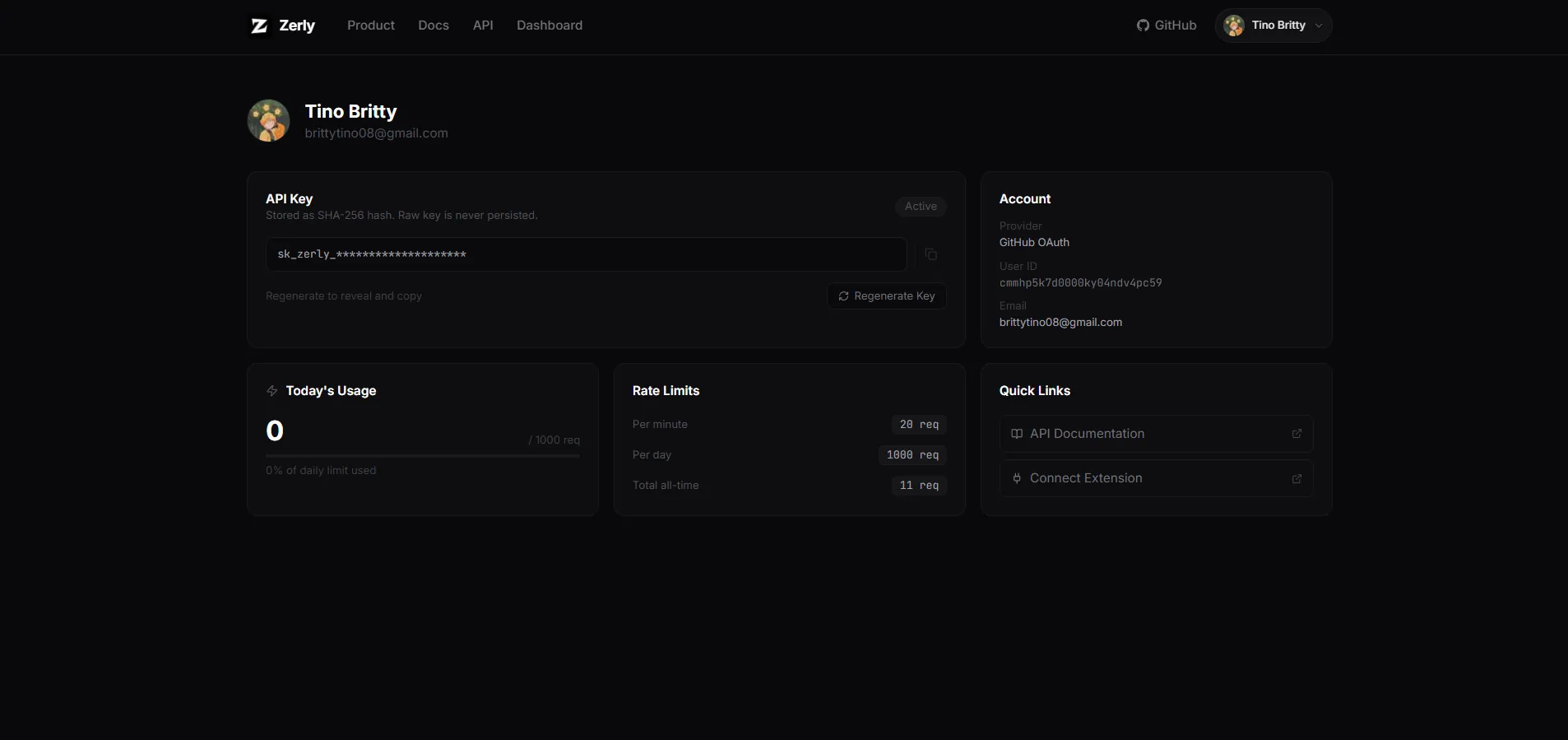
- Usage and plan controls are enforced for predictable access and billing behavior
The optional backend adds subscription and usage governance, account linking, and rate-limit policies, making the extension viable for both individual developers and teams.
A Transparent Caveat
What can be verified clearly is the product behavior: model routing, fallback strategy, and user-facing integration patterns.
What is not publicly detailed at model-card depth is Zerlino 32B internals such as training corpus and benchmark methodology. That distinction matters, and being explicit about it helps keep expectations realistic.
Final Take
Zerly is not trying to replace engineering judgment. It is trying to reduce blind spots.
By combining architecture visibility, flow tracing, risk awareness, and AI explanation in one extension, Zerly helps developers move from code browsing to system understanding. For teams working on real products with real constraints, that is a meaningful shift.
Explore Zerly: zerly.tinobritty.me GitHub: github.com/brittytino/zerly